Here is an uncomfortable truth about job interviews: you could have all the knowledge in the world, but if you can't express it well in the interview, another applicant who speaks better and uses better vocabulary might get the job and take over the role that should have been yours. Hiring managers don't grade what's in your head. They grade what comes out of your mouth in those 45 minutes.
The interview is a language test in disguise
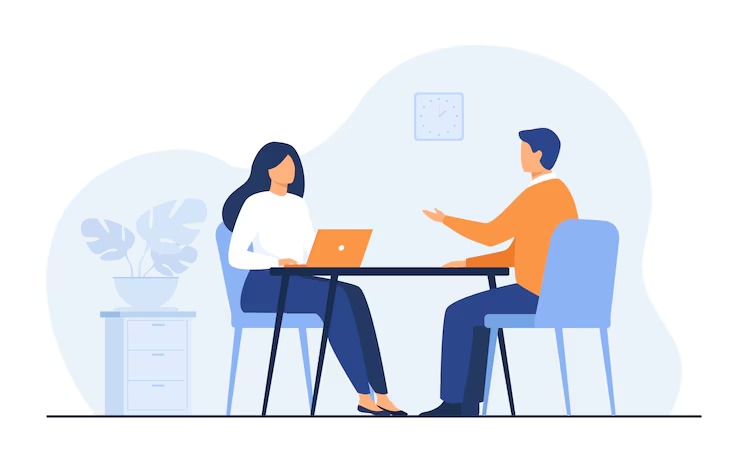
That sounds unfair, and sometimes it is. But put yourself in the interviewer's chair: they meet two candidates with similar degrees and similar projects. One searches for words, answers in short, hesitant sentences, and falls back on vague phrases. The other explains their work clearly, uses the right professional terms, and asks sharp questions back. Guess who feels like "a better fit for the team".
It was never only about knowledge. It's about how convincingly you can present it.
Why Germany makes this extra hard
If you're looking for a job in Germany as a non-native speaker, you already know the challenge: German is not an easy language. The grammar is unforgiving, the professional vocabulary is long and specific, and interview German is its own register — more formal than the German you use with friends, but full of standard phrases that native speakers produce without thinking.
Many international students in Germany speak good everyday German and still freeze in interviews. Not because their German is bad, but because interview vocabulary — words like Berufserfahrung, Gehaltsvorstellung, Kündigungsfrist, Stärken und Schwächen — simply never came up in daily life or at university.
The trick: learn the words that actually appear in interviews
Here is the good news: interview language is surprisingly repetitive. The same questions, the same phrases, and the same vocabulary come up again and again, across companies and industries. You don't need to master all of German. You need to master the few hundred words that dominate the interview setting.
That is a much smaller, much more realistic goal — and it's exactly what spaced repetition flashcards are built for.
- 1Learn the high-frequency interview words firstFocus on the vocabulary that appears in almost every interview: experience, strengths, notice period, salary expectations, teamwork, responsibilities.
- 2Review a few minutes every dayTen minutes of daily review beats a cram session the night before. By interview day, the words come out automatically instead of being searched for.
- 3Practice saying them out loudKnowing a word passively is not the same as producing it under pressure. Build example sentences and say them aloud.
To make this easy, we put together a free German interview vocabulary collection on RecallCards, our flashcard app. One click adds the deck to your account, and you can start reviewing right away:
Get the German interview vocabulary deck on RecallCards →
A few more things that help
- Prepare answers to the standard questions (tell me about yourself, strengths and weaknesses, why this company) and rehearse them in German out loud
- Reuse the vocabulary from the job ad — if the posting says "eigenverantwortlich", say "eigenverantwortlich" in your answers
- It's fine to speak slower and simpler, but correctly, rather than fast and messy
- If you blank on a word, describe it instead of stopping — interviewers care about communication, not perfection
Your knowledge got you the interview. Make sure your words can carry it over the finish line.